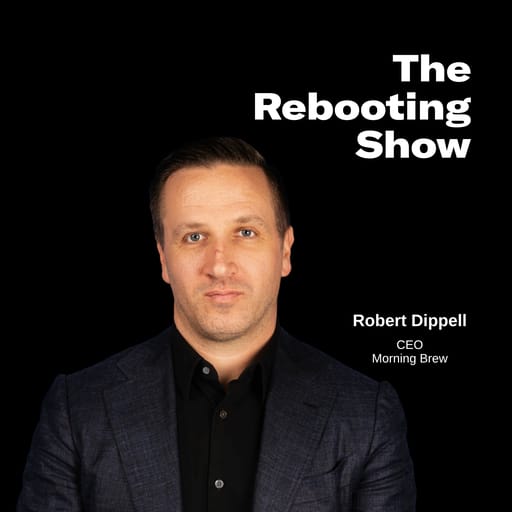
Transcript 0:00 [upbeat music] This week's episode of the Rebooting show is brought to you by Beehiiv, the platform trusted by enterprise publishers like Newsweek and Time. 0:16 Newsweek is in the midst of an exciting transformation with AI disrupting search traffic. They're building direct relationships with their audience through newsletters. 0:24 Bharat Krish, Newsweek's Chief Product Officer, spoke about why they chose Beehiiv, and he said that Beehiiv's consumer-first tech-driven DNA was exactly what they were looking for. 0:35 That B2C background ended up growing their tool into being enterprise ready. Newsweek has aggressive newsletter plans designed around adding new audiences and launching new products. 0:47 With more industry leaders like Newsweek migrating to Beehiiv and twenty twenty-six planning in full effect, now is the time to see how Beehiiv can take your content to the next level. 0:59 If you wanna see what your next stage of growth could look like, go to beehiiv.com/trb. That is spelled B-E-E-H-I-I-V.com/trb, and meet with Beehiiv's team of growth and newsletter experts today. 1:16 Thank you so much to Beehiiv for their support. Welcome to the Rebooting show. I am Brian Morrissey. I am joined by Morning Brew CEO Robert Tapell. 1:25 We're gonna talk all about Morning Brew as a platform company, about Morning Brew Inc, now Morning Brew Group, and the recent acquisition of BizNow. 1:35 This is a year later, Robert, from when we did this, I guess last March. Exactly one year. Yeah. You were kinda new-ish, I guess, to the role at Morning Brew, leading it. This would be a good time to check in. 1:49 You guys just did an acquisition of, of BizNow, which is near and dear to your heart. You were there for a while. I thought it'd be good to, to get at what Morning Brew is now and what it is building, right? 2:01 So, you know, Morning Brew a, a long time ago was an email newsletter company. 2:05 There might be some people who still think of, of Morning Brew as y- uh, you do have a very strong email operation, but it's evolved since then. 2:14 You've got a B2B arm, you've got professional brands, but then you also have consumer brands and, and now you have a group structure. So what is Morning Brew now in twenty twenty-six? Great question. 2:28 Yeah, I mean, so i- it's awesome that we're doing this exactly a year ago when I stepped into the CEO seat that, that time, right when we were speaking last time and doing this show. 2:39 I actually foreshadowed, and in other interviews and in writing, that I thought that Morning Brew really had the opportunity to be more of a, a platform business or to, to grow inorganically, but that, you know, we weren't gonna rush it. 2:52 It wasn't gonna happen right away, but that there was definitely plans for that in the future. 2:57 And then we spent, you know, all of twenty twenty-five really delivering and making sure that the core business was, was healthy in order to get to this point where we could, we could do the group structure. 3:07 So A, just wanted to point that out. We've, we've been foreshadowing this for a while, and we're very fortunate that that foreshadowing actually came true. 3:14 Where the business is today, to directly answer your question, uh, the core Morning Brew Inc. business has evolved. You, you kinda hit a lot of the main talking points. 3:22 We are still very strong at newsletters, and the newsletter business is, is a, a big part of our company, both from revenue and the value that we provide our audience. But we've diversified a ton. 3:33 I mean, I think that part of the strength in media right now is if you have healthy diversification of content and monetization. So we've invested a lot on the B2B side. We now have nine B2B verticals. 3:44 We launched Revenue Brew last year, and that was a big success. We're launching another vertical on May fifth. Every time I do your show, I think I- I know you do [chuckles]... launch something. 3:54 I'll tell you what this one is if you want. Good. [chuckles] We can talk about it. And then on the consumer side- Wait, wait. Tell me. Tell me? Okay. We're launching Founder Brew on- Okay, that makes sense... 4:03 it's kind of a different... Now that I've said it, I have to explain what it is because there's so much noise in the founder, you know, ecosystem. 4:09 There's a lot of podcasts that are really, really good and we're not gonna try to compete with. But we think we have an interesting angle to founder content. 4:16 I think that Morning Brew readers and listeners want more entrepreneurship style content from Morning Brew than we're giving them, which was kind of the original reason we started thinking about this. 4:26 But Founder Brew is gonna do a couple cool things. One, it is going to cover a wide range of businesses. It's not gonna be hero worship of Silicon Valley. It's not gonna only cover AI businesses. 4:37 It's gonna cover more obscure companies and lots of companies that feel more relatable across lots and lots of different industries, which was the same angle we took with Revenue Brew. 4:45 It's also going to have a first person as told to angle, so think of like The Players' Tribune, but for founders. Oh, cool. 4:53 And we're gonna be interviewing a lot of people and then telling stories, you know, through their voice, and we're gonna focus on specific moments that really matter rather than just like rambling of leaders and founders. 5:05 So like if you're a business that's scaled to, you know, X hundreds of millions of dollars, when was the moment you needed to hire your first HR person? Yeah. Like what was that point? 5:14 Or if you lost all your money right before you were getting fou- founding because, you know, an algorithm changed, like tell us about that. Like what did you do? How did you pick yourself up? 5:21 So it'll be very, very specific broad range as told to, which we think will be interesting. Yeah. That's cool. So anyway, back to the, the previous monologue. So that's the B2B side. 5:32 Consumer side, we've made, made a lot of progress since, you know, we spoke last. We've launched a number of new consumer franchises. 5:39 That show that Macy runs out there just had its one-year anniversary and it's doing amazing. Oh, yeah. That's a great show. Yeah. Great show, and there's just a lot of interest for that type of content right now. 5:48 She's doing a really good job. And we-- the like business behind the scenes aspect, which I know you personally care about, is in a really good spot now. 5:57 We've quietly staffed up more of the infrastructure, you know, not 50 people, but10, 12 people in the right places to really make, make the creator side work, and that's going incredibly well. 6:07 So I think we've increased monetization on the multimedia side by, you know, roughly 80% year over year, and that's going well. So we had this nice mix, events business is going well. 6:18 Finally got to the point where my foreshadowing about, like, "Hey, we should do deals," was realistic. Axel Springer saw what we were doing, and the hypothesis is really that Morning Brew Inc. is a template. 6:30 Like, I think what we have is pretty special, and I think if we can find companies that fit, you know, a similar mold, that we, we should do deals and, and build out this group. 6:39 So what happened mid last year was we sat down and, like, really created a, a kind of a list of non-negotiables, kind of like a, a, a charter, whatever you wanna call it. 6:49 Instead of like, if we're gonna look at deals, here's what they have to look like. Like, media companies have to follow somewhat a similar formula of us of having a direct relationship with their audience. 7:00 They can't just have passive traffic. They need to have a healthy diversity of content. They can't just be in one channel. They need to have healthy diversity of revenue. 7:10 They can't be only reliant on, you know, programmatic revenue. Their brand has to be one that people actually give a shit about, and, like, the audience really is loyal to them. 7:20 So we kinda, like, set all these things that guided what we were gonna look at. 7:24 And then BizNow went up for sale, and I had a lot of, you know, experience with that business, and that company fit every criteria of our, of our non-negotiables. So we pursued it through a very competitive process. 7:37 There was more than a dozen other private equity and strategics going after it, and we were, we were able to get it. So now we have Brew Media Group, which I'm the only employee of currently. 7:47 You know, operationally, the holding company that both Morning Brew Inc. and, and BizNow sit within, and we're gonna do more deals and, and fill it out. 7:54 So talk to me about being, like, a platform company, and for, for those who don't, aren't fully enmeshed in this, this is, this is a term, you know, I probably con- came in contact with, with a, a few years ago. 8:07 Like, bankers, maybe it was the... I don't hang out in those circles enough, but, like, bankers who would talk about it. 8:12 And basically, the way I understood it was you either build up the infrastructure that allows you to plug in others, or you're subscale, you don't wanna take on all the infrastructure, and you wanna be plugged into someone else's platform because then you're more valuable. 8:30 And, you know, the M&A process, at least my experience with it, was always [laughs] people had two spreadsheets. 8:35 They'd have one spreadsheet about what your business would look like with, uh, on their platform, and it looked better. 8:42 And then, you know, they, they had the other spreadsheet, which is what your business looked, looked like on its own. 8:46 And you're like, I would be like, "Well, why don't we use your spreadsheet instead of this spreadsheet?" [laughs] "Because your spreadsheet's probably better. That's more realistic." But leave that. 8:54 Like, what does being a platform mean for Morning Brew? 8:58 Yeah, I mean, the way we think about it a- as the, as the acquirer or what, kind of like the, you know, the control set that's going out to looking for companies is, is, is opportunistically in two ways. 9:07 Like, are there businesses that are in industries and aspects of com- of business that we are not in and should be? 9:16 Like a BizNow is in real estate, and they're in a market, an industry that we really care about as a huge part of the global economy. Morning Brew Inc. certainly has license to care about real estate. 9:26 So rather than building, we were able to acquire, you know, the leading event and, and digital publication in that space. That makes a lot of sense. 9:33 There are other cases where we could really help businesses go further than they could alone, just with, like, the infrastructure we have. 9:41 And we should probably talk about, like, the investment approach for B2B versus B2C, 'cause it's very different. Mm-hmm. And also the value we could provide companies on B2C versus B2B. 9:52 Because, like, on the consumer side, for instance, you know, there, there aren't a lot of, like, larger consumer businesses that I think would really fit our criteria that I mentioned earlier of being, like, super healthy. 10:01 But there may be creator groups, there may be, you know, YouTube channels, there may be groups of, of, like, a streaming show, and the value that I would offer them could be more infrastructure. 10:14 It could be that we have beautiful studios in our office, and we have producers and folks- Sure... that they don't have and on the sales team, you know. So it's just, like, a very different value for- Right. 10:21 So you could be a platform or just plugging, plugging someone into your existing infrastructure. I've been to the Morning Brew offices. You guys got a lot of stuff there. I, I did a little video show. 10:33 In the studio, right? In the studio, yeah. Yeah. It's great. You've seen it. It's bright and shiny. Yeah, and you got a big sales force too, right? That's good. 20, 20-ish people. It's not huge. 10:42 We're not, we're not bloated. Yeah. But yeah, 20 more than most small companies. And you got distribution, right? Yep. And that's, that's, that's really valuable. 10:50 But when you're talking about, like, a, the group context, which I find really interesting because, like, originally when Axel Springer purchased Morning Brew, it wasn't entirely, right? 11:02 But it was actually through Insider, w- which was what Business Insider was known- Not officially. I think- It was... I think it was Position being a part of the group. It was Position as part of Insider group, right? 11:11 Yeah. And I remember asking Austin, he's like, "Well, really we're part of Axel Springer." [laughs] I was like, "Look, I don't know. You guys deal with it internally." 11:18 But it, it seems, you know, y- you see the opportunity to have different companies. What are the advantages of, you know, it, of BizNow being part of the group, right? Like, 'cause I can see... 11:34 Like, BizNow does, like, 400 event- it's got a huck events a year. It's got a high octane events business, you know? Yep. 11:42 And I could see, I mean, like, oh, well, that kind of high octane events business plugged in with all of these B2B properties, I mean, you're already doing events, but not to that degree, I don't believe. 11:55 Could be wrong, but- No, and that's not the opportunity, to be clear. Okay. I, I think that the, the style of events that we do are, the production value is a little bit higher. 12:04 It's, it's just a little bit different of an experienceCommercial real estate is a very unique industry, and there's a certain type of event that does really well there that really focuses on networking and, like, the right people being on stage. 12:14 The opportunities are, you know, we'll talk about events for a second, more operational. BizNow operates in forty-seven markets. 12:22 They have eight different offices, and they have this, like, very scrappy regional playbook where their regional offices service tow-- cities all over their area, and they can kind of move and expand and contract into new markets depending on what's going on in the industry. 12:38 So, like, when Austin, Texas blew up post-COVID and there was a lot of migration there, they were able to move into Austin just as quickly as the cranes moved into Austin to build all the new infrastructure because they had teams in Houston and Dallas. 12:51 When the Carolinas had a lot of migration, their DC team was able to help with that. 12:55 So they, they have all this flexibility, and we have tons of interest from our advertiser base and our audiences for Morning Brew to be visible live in California, in Miami, in Chicago, and now instantly I have resources to do that. 13:12 I have a company that has, you know, boots on the ground in all of these cities that we do not have. 13:18 So I think that Morning Brew having more events on the West Coast is a complete no-brainer, and it is much easier for me to execute that now. There's also, like, some pretty cool opportunities with... 13:28 They have a corporate retreat business or executive retreat business where they, they take over the one hotel for several weeks every year, and they have two multi-day retreats that are, like, a higher ticket price. 13:38 They're invite only. You know, should we have a version of that? We now have the infrastructure and the relationships to, to pursue that stuff. So it's a little bit more tactical coming our way. 13:49 Going their way, you know, we are very, very strong at digital marketing and newsletters and, and revenue strategy and what's going on with our, our revenue org over the last eighteen months is very, very good as a, as a case study for how media should operate. 14:05 Applying that to BizNow, who has a portfolio of seventy newsletters, there's a lot of potential upside there just from information sharing and, and having the teams work together. 14:14 So we're, we're exploring a lot of stuff like that, and, you know, the thing I say about BizNow is they would get to their goals even if no one from Morning Brew called them for the rest of the year. 14:25 They're just an amazing company. But with our help and kind of this value sharing back and forth, I think they'll get even further. I think we'll get even further. Okay. Right. 14:34 So this is a, a way for them to continue operating the bus- like, the, the business is, is doing well, and you're not trying to sort of integrate them into- No. Not at all. 14:46 No, I, I was very-- I mean, if you read my article on the day we- Yeah... we bought it, completely separate companies. The CEO, Greg Mayer, who, who I trust implicitly, is staying on. 14:55 The entire leadership team with average tenure of nine years is staying on. No layoffs. No, no consolidation. It's two really strong companies, and we can make each other, you know, stronger back and forth. 15:07 That's an ideal state. I don't think every single deal we will do will be that way, but it's sure nice that the first one is and that-- and this company can independently be strong. 15:17 So, uh, is it different building as, like, a platform from, like, email as a base, right? 'Cause, like, it's funny 'cause, like, email is still so strategically important to the model, right? 15:28 Even as, like, more engagement, I'm sure at some point in the not too distant future, you'll have more engagement that is happening outside of email products than- The growth is already more. 15:39 Like, I think the growth, like, year over year that we see on engagement is coming more prominently from YouTube, social video, and audio. But newsletter continues to grow, too. 15:50 So I, I interrupted you, but yeah- No, no, no...we're already- But I, I'm just like the strategic importance there of... Because building off of, like, email as a foundation is... 16:01 It's just strategically there's so much-- there's so many more advantages, obviously, than if you were building off of, like, say, like, a webpage business, right? 16:10 Like, I mean, what happened on the other side of the house, I mean, I won't have you say it, but like, you know, Business Insider and stuff is not... 16:16 Like, I mean, the reason was because, like, that ended up not being as... I think there are so many advantages to building off email as a platform. 16:24 For instance, like, being able to spin up those professional brands, you know, was, and we talked about this a year ago, you know, that was enabled by, by the email. 16:37 Like, you know, you got the email, and you were able to then filter, you know, an email list into different subsegments, and that instantly made those, those email addresses, that same pe- like, magically more valuable, right? 16:50 Yeah. And then you could build off of that, and it's, it's-- there's a lot of advantages, I would think. I, I, I would... That's all true. The data side is very true. 16:58 You're collecting much more data you can do a lot with. I think, though, like, zooming out and being a little woo woo about it, like, the, the real thing that matters is passive versus an actual relationship. 17:09 And, like, this is not my doing. Alex and, and Austin get all the credit, but, like, they built a business via email that just created a ton of loyalty, a ton, a ton of direct relationship. 17:19 That is completely different than a business that was built based on passive relationship and passive traffic. 17:25 And I think every table that you sit at or host or interview, there are two different types of media operators at that table. 17:32 There's ones that have passive relationships and ones that have direct, and the ones with direct are the ones that are building and doing deals, and the ones that are historically passive are the ones that are scrambling to figure out how to continue. 17:44 So you guys are growing. You're profitable. It-- A-Axel Springer i-is, is known to be acquisitive over the last years. I mean, the... 17:53 And, and they're doing all kinds of different M&A in different, in different areas, right, of the business. This is, like, a, a, an opportunity, I guess. 18:00 Like, what kind of, what kind of companies do you think make sense? I mean, you talked a little bit about the criteria. I don't expect you to name, name targets, obviously. 18:10 But what kind of more color could you give about-How you see this group structure and the types of companies that, that would work within it? Yeah. 18:18 So I mean, we-- like I mentioned, the, the consumer versus B2B acquisition strategies are, are different in, in like the types of targets we look at. The B2B side, it's, it kinda starts with the industries. 18:31 Like we would have to really care about an industry first that either we should be in and we're not, or we wanna double down. So, you know, we are really strong in marketing with Marketing Brew. 18:43 Are there other adjacent parts of marketing and think people are doing things that we find interesting? CFO Brew is, is one of our strongest as well, but like the finance space has so many different spokes to it. 18:56 Like, are there publications that are in a specific area, like financial advisors or, or other areas that we would be like, "Oh, that'd be interesting to bring them in." 19:04 Or there's just a player in an industry who's doing something like more scrappy and interesting than we are, and it would not be appropriate for us to try to replicate it, but we could, we could bring them in with the industry. 19:14 So it really starts with an industry focus and then all of that criteria about like healthy revenue, profit, brand that matters, you know, diversity, all that stuff. The consumer side is completely different. 19:27 I mean, I think it starts more with content channel. I think I'm more interested in what are people doing that's, that is new and different and, and would be additive to what we have. 19:40 Like, i- are there YouTube channels that are growing really quickly and have a, a content approach that like is different, but would f- feels like it would fit within the Morning Brew ecosystem? 19:50 Are there streaming shows, you know, that, that is not a format we do, but like they are covering the business of the world or some sort of business categories that you're like, "Yes, that, that should fit within Morning Brew." 20:02 Like, it, it isn't too much of a stretch. So it-- for me on the consumer side, it's more content a- as like the starting point. Mm-hmm. And is this gonna be additive? Will our audience like it? 20:13 And I think that that part is changing very quickly. I think there's a lot of like really cool three to five to 10-person shops doing stuff. 20:23 The challenge would be is, you know, is it a good choice for them to come to be a part of a Brew Media Group? Can we offer them enough value in their story as opposed to them doing it themselves? 20:33 And we would be very honest, you know, with the folks we're looking at to, to make sure it's a good equation for, for both sides. So that's just a little bit of how we're thinking about it. Yeah. 20:41 So what-- So let's talk about that equation, because I think that it's an interesting one, because particularly when you get into the, I don't wanna call it like creator, but it's like these, I don't know what we call this like area because it's, it's never just like one person, but usually it's identified around an individual, not only. 21:00 But these are leaner models. They can be incredibly profitable models if, if you hit it. But they also provide a lot of leverage, right? 21:08 Like, I mean, if you're, if you're doing, you know, I always talk about my friend like CJ at Mostly Metrics, like talk about leverage. 21:15 You know, if you're doing like three mil top line at eighty percent margins, like that, that's leverage for sure. [chuckles] Yeah, and he should just keep doing that. He should just keep doing it, right? Like- Yeah. 21:25 That makes sense. So what is the, what, like what is the sort of ideal? 21:28 'Cause like, I mean, it's interesting because like I, I, I think intellectually there's a lot, and I think a lot of people are trying to figure this out, like of the infrastructure of media companies, you know, whether that is the nice studio or, you know, 20 great salespeople, or it's, it's Christine and a, a, a, an audience development team who knows what they're doing. 21:54 Like all these kind of things because if you're three to five, like you can't do everything well at the end of the day. No. And you have, you have holes, right? And you just have to accept that. Yeah. 22:04 And then you don't get to focus on what you care about, which is probably being creative and creating good content. 22:09 But there's obviously there-- I think that there is a tipping point where you could, as an individual or a small group, get to a point where you break through and you're making enough money and you, you're in a rhythm and, and it's working. 22:22 I think that's really hard. I think it's like anything to, to be the ones that, that get to that point. So I mean, we, we've always been in the business of developing and supporting people. 22:33 We don't, you know, bring in talent that is decades and decades into their career and, and then try to fit them in and like adapt to them. 22:44 We have always been really supportive with predominantly younger creators that have come in and tried a lot of things, and we've given them freedom to try things, and then they find a format and something that lands, like Dan Turemi with Good Work, like Macy with Out There. 22:57 Like that was iterative, you know, and we were investing in them, and they were investing in us with, with their time to, to be here. 23:05 And I think the attraction was, you know, healthcare and salary and upside on the thing that you love doing, but then also like all these resources that you run out. 23:14 So for people that would come in, they would need to be at a level where that makes sense to them, where those resources are a-appropriate, or sorry, attractive. 23:23 And I think there's a lot of people out there where a lot of groups and, and, and creators and folks that that would be really valuable to have, and we could create, you know, legitimate value for them with the sales team, with audience development. 23:35 But we're not gonna force it. We would only do it if it was legitimately a good equation for both sides. Austin Rief was, was on this podcast, I think it was 2022, and we were talking about creators, you know- Yeah... 23:46 B2B creators, right? What, what have, I mean, obviously you've been there just last year. What, what have sort of the institutional lessons been with working with quote unquote "creators"? 23:57 'Cause some, some things have like stuck, some things haven't. You know, I re- remember the, the Money with Katie. You know, that was like a big franchise, and then I guess she bought it back. 24:08 W- what have the been the lessons you guys have learned about the ways-- 'Cause it doesn't seem like you wanna be, have like a quote unquote "creator network." 24:15 You got shows, but you don't want a creator network.Like what do you learn? Well, we don't wanna have a, a-- I mean, I, I don't know, I can't foreshadow the future. It, it's possible that we grow that network over time. 24:25 I just think that everything we do is, like, pretty responsible and not-- we're not, like, over-indexing and saying, "Oh, we're gonna go hire a hundred creators," and that sounds great in a LinkedIn post, but, like- Yeah... 24:34 you know, that's not necessarily good in, in practice. I mean, I've been here three years now, and the CEOc for one year, so I've seen how, how some things work. 24:43 The Money with Katie is a good example, like, Katie wanted to do something differently. She wanted to go. She has her own other podcast now. 24:49 She had, she had different priorities, and we were supportive of it, and it made no sense for us to try to, you know, keep her IP when it was something that she had built and, and deserved. 24:59 So, you know, we came to a very amicable agreement for her, for her to, to move on and do what she wanted to do. 25:05 With the other creators that we have, I mean, it's funny, Ryan, like, the number one question I get from other operators is, like, "How do you structure their contracts?" Like, "How do you keep them there?" 25:14 And the two things is, one, you need to give them upside on the things that they're creating. They need to feel some sense of ownership because this is, you know, to them, cre- this is their creative work. 25:25 This is what they're doing. It's content. They put a lot of blood, sweat, and tears into the writing, to the editing, is a ton of work. So you gotta give them some upside. 25:32 And then two, like, we're not too limiting on, you know, what they wanna do in their free time within reason. Like, Dan Toomey is a stand-up comedian. He does a lot of stuff. 25:41 Like, you know, Macy is, is, is posting and, and can do other things on her personal account. 25:46 Like, we don't want them to feel as if they are completely constrained, but they obviously know that this is their, their full-time job, and there are requirements to that. 25:56 And I wrote an article about that when we launched Out There about the fact that I think that people just don't talk about creators as a relationship. 26:03 They, like, inherently start using words that sound very transactional, as if these creators are, like, consultants for them, and it's, like, unemotional, when it's the opposite. 26:13 Like, they're, they're closer to artists, and you need to, like, create a relationship with them with trust, and then you need to, like, deliver on that. 26:22 And I'm sure we still have room to improve on it, but we try to deliver on that trust, and, and over time, that will keep them here. That's the goal. Right. I just-- I guess it's the-- 26:33 it's trying to understand where the sort of value lies, whether it's, it's with the, the individual or the institution, right? 26:42 And, you know, if, if the individual can take the brand with them, take the distribution with, it's like, well, what is the, what is the media company? You know, it's like, it'll be interesting to see. 26:56 I assume it will end up getting traded, but, like, you know, the Vox podcast number, that's a talent business. I think they've done a nice job with the talent business. 27:03 I think what's unclear is, is how much value is Vox and how much value is Scott, um, Scott Galloway and Kara Swisher, and where, where do you div-divide the line? 27:13 'Cause without l- you know, the-- it seems like the shoot, the, the leverage a lot of times then goes with the talent, and so maybe the incentives are not aligned. 27:23 I'm also curious, and yeah, and that, and that is a completely different level of experience level with talent and just, like, a different economic model- Mm-hmm... 27:32 and, you know, a, a different, a different thing than, than what we run. But yeah, I am, I am curious how that works out as well. So talk to me about the event strategy overall, like- Sure... at Morning Brew. 27:44 I mean, every-- like, I was talking with a-another business-focused publisher, I'll just say, and they were like, "Yeah, we'll do 150 events next this year." I was like, I don't even blink when I hear these numbers. 27:55 What industry? In, in business. [chuckles] Interesting. I mean, Forbes does, like, a couple hundred. Yeah, you know, I mean, some people- Biznow does 400. Wow. 28:03 Yeah, it depends on the type of event, and when you do the, like, the, like, I, I s- I don't know the real estate industry, but it, it sounds like they're, they're a little bit similar to politics that have, you know, you can do some, like, politics. 28:17 Washington, DC loves, like, a, a churn and burn breakfast. 28:20 You do a, a view from the top, you do, like, you get a senator, maybe a regulator or something like this, you get 75 people in the room, you charge like 100K, and you do it like two or three times a week. 28:31 Yeah, and the relationships generated are, are worth it for people who participate. Yeah. Go ahead. Yeah, yeah. There are different- Sure... there are different types, types- Yeah... types of events out there. 28:39 But how do you view the, the event strategy overall at Morning Brew? What is it? So there's two sides to it. I mean, what we really focused on the last, like, two years is the B2B side. 28:47 We kind of-- When I arrived, there were, call it, they were working to do four big tent poles a year, and it was kind of putting all the eggs in that basket, and we simplified that down to one large Marketing Brew summit at the end of the year in September. 29:04 That is, like, a larger event for us. It's 500 to 600 people. It's a full day. We rent out the Time Center, which, you know, everybody's doing events there now in media. It's a great venue. 29:14 And so that's kind of, like, our bigger event, and maybe we will do more of those summits. 29:18 But our bread and butter on the B2B side has become more of a half-day model where it is topical, and it is tied to a specific vertical. 29:27 So Marketing Brew may host a creator, you know, the future of creator business event. 29:34 HR Brew, we have one coming up that is all about, like, future planning HR topics, and it's more of a, a, a mini summit to talk about, like, all the HR topics in the AI age and how people are operating. 29:46 Retail Brew might want to do one on supply chain, and there's a supply chain event. Yeah. We had a sports market, so they're topical and tied to one of ours. 29:53 They're a half day- And they can be opportunistic, let's be real here, like [chuckles] Yeah, and, and, and the margin on them is pretty strong. We get a good- Single sponsor or multiple? Multiple. Okay. 30:03 There's tiers, so we usually have a presenting- Yeah... sponsor who's, like, the name on the side of the stadium, and then there's, you know, two to three others. 30:09 And we get pretty creative, like we've had Tend was a bathroom sponsor, and they, like, decked out the bathrooms for people. We've done- All right... 30:16 you know, interested Google was a coffee sponsor, and we had a barista on, on site. We've done juice bars. We've done photo booths. We do all sorts of stuff.But those, those do well. They're smaller though. 30:27 They're like 100 to 150 people and then we still do a lot of virtual events actually. Very, very important part of, of our business, especially for the B2B clients. Good lead generation- Lead gen... get good guests. 30:39 Don't call them a webinar. First rule of webinars, don't call them a webinar. Don't call them a webinar. Yeah, very 2021 to call it a webinar. Yeah, and then we may... we're, we're, we're testing new things. 30:48 We just did an evening event for Revenue Brew because revenue people prefer cocktail parties. Yeah. We, we do a lot of private dinners that we don't talk about, that don't go on websites or anything. 30:58 We may do more of those. So yeah, we're, we're still in kind of like a test mode. On the consumer side though, before I forget- Yeah... we are testing a lot of cool stuff. 31:07 We've started doing trivia nights around New York City to like see if people would like that, and Neil and Toby, our podcast host, host them, and they're doing great. 31:16 Like, people are really interested in hanging out with Morning Brew and playing trivia. We've done comedy shows. 31:22 We're gonna do more of this like experiential stuff that comes from our consumer brands because people really like the personalities tied to those brands- Mm-hmm... 31:30 and they like being a part of that little mini community. They feel in the know, and so we're gonna do more of that stuff, and we haven't heavily monetized those things yet, to be honest. 31:39 We're just doing it because we know our audience likes it, and we're proving out that that stuff could work. Yeah. Dan Toomey could, could fill a theater. He's funny, so. He could and he does. He does. 31:50 [laughs] I'm sure he does. He's a, he's a funny guy, so you guys should do Good Work live. I'll go, 100%. I'll tell you the next one, for sure. 31:57 The AI stuff, what is the policy at, at Morning Brew, and how are you, how are you approaching it? How are you using it, like both yes- Yeah... I'm sure you're using it for efficiency and whatnot. 32:08 We're using it for efficiency. I mean, my, my biggest word that I've come back with the company is just to be very, very curious right now. 32:16 Like, I feel like that's a great word for not scaring people, but encouraging participation, and we have over the last like six to eight months, 32:28 I think done a good job of quietly really creating a healthy culture of using AI internally for internal priorities, efficiency. We have a bunch of people that are proactively building stuff. 32:40 We are not creating any content completely with AI. 32:43 We're, we're not gonna cross that line, but we do have an AI policy about obviously using AI for research and to synthesize lots of data for reporting and stuff like that. 32:53 But we- we're not using it to like wholesale create content and pass it off as, as human created. I mean, Morning Brew is very manual in, in most things we do. 33:02 I mean, even the ads we write are, are, are generally written originally, not all, but, but most. So anyway, the long-winded way of saying we're doing a lot of stuff internally. 33:11 We've built some internal tools that are pretty exciting. We have like a, a, a revenue tool that is... 33:18 I don't wanna go into too much detail publicly, but like we, we have a proprietary tool that we're using internally that like takes all of our audience data, all of the research we've done about different companies, blends it together with CRM data, pulls in lots of outside things, and we have like a hub where if you're researching a business to talk to, we can not just pull together all the public information, but we can say how our audience is interacting with that business, if they're in market for that business or that category, and some like unique insights that we have from Morning Brew's proprietary research. 33:48 We've also done some stuff just on like legal contracting and, and other efficiencies and things like that. So has it had any... Has the use of AI had any material impact on the business? Like is it just marginal? 34:00 Attribution is tough. I mean, we're, we're monitoring... 34:04 I'll tell you this, like I can't tell you with complete authority on the spot the correlation between the success we're seeing over that same time period, but average transaction size of our sales team continues to climb. 34:20 Our booking volume and velocity is up significantly again so far this year, and last year was... We broke lots of records last year. 34:29 In the timeframe of us launching that tool, of having more efficiency where the sales team isn't doing a lot of stuff that they, they necessarily should be spending the time on, I do think it's adding up. 34:39 I think that attribution for executives like me is, is difficult. 34:42 You can watch every metric possible and it's really encouraging when you see it go up, but it's hard, it's hard to point and show that's exactly from, from these tools, which I think is what you're asking. 34:52 Yeah, because I mean, look, there's... It's like you. I mean, you consume all of this content that is like, "Oh my God, it's gonna replace doctors, it's gonna replace everything." I'm like, I don't know. 35:02 I mean, like, yes, it is definitely improving many things like just day to day for me, but I'm like wondering within companies itself, you know, I, I talk to people in, in lots of different industries and they're like, "Yeah, a little bit, a little bit here and there. 35:19 We use Copilot." And [laughs]- Yeah... I'm like, there's, there's something that's not matching up when you get out of the coding world. 35:25 You know, my other podcast, Troy Young, is like vibe coding a product right now, and he's like, "This, the world is, is changed." I'm like, "Okay. Okay." Yeah. 35:34 It's certainly escalating quickly, and I think all of us have people in our lives that have very dramatic views as to what could happen or could not happen. 35:42 I don't know, especially in media, things do tend to happen a little bit slower than you think they're gonna happen, and I have historically used that as an advantage to get ahead of stuff and, and to be ahead of competition. 35:54 So I, I think that we're doing a really good job behind the scenes and probably ahead of most media companies, but we're, we're not making drastic changes at the moment based on it either. 36:05 We're just opportunistic with it. So it seems like, I mean, you guys are doing well definitely compared to the overall industry, right? 36:15 And I think it's probably down to, I mean, beyond like just, you know, simple good execution, which is most of everything in media, you're less exposed to the search problems. 36:26 That's a problem of, of a specific type of publisher, right? And, you know, email is not-Immune to challenges, but you're not as exposed to, to that part. And then you have a B2B business. So does that mean... 36:40 I mean, do you, do you end up thinking that you'll invest more in the B2B versus the consumer side, or do- it's just wherever the opportunities are? 36:50 I, I do not honestly have a preference of investing more in the B2B side. I think that it's really important actually that we maintain balance with our business and, you know, you, you know how M&A works. 37:03 It's not, it's not as if everything is on sale all at once. Like, it really depends on what is available and where they are in their story, and if it fits what we're doing, and that is kind of a, a rare equation. 37:15 But I do not want to overweight this business on, on either side. 37:20 I mean, the B2B side of the business is, is amazing, and we're gonna continue to invest in it heavily, but, like, people fell in love with Morning Brew because of the consumer side. 37:28 They fell in love because of Morning Brew the newsletter, and I don't want to, you know, optimize away from that at all. 37:36 I, I think that speaking to people as individual consumers and, and investing more in also the channels where they're going with YouTube and social and, and audio is really, really important, and that's gonna, you know, be largely on the consumer side. 37:52 Do you think B2B will be less like newsletter focused? I think the mix will be better. Yeah. Like, we're, we're already pushing that. 38:00 I mean, we, we already have shows for the B2B side on HR Brew, Marketing Brew, Tech Brew, and we are trying to create better media mix. That's the phrase that we use. So it's not only newsletter. 38:14 I think that's unhealthy. So, you know, we, we just talked about the event strategy. We have our multimedia strategy. We're investing more in social on the B2B side. So it's just all about having good mix. 38:23 The newsletter still remains, like, the foundation of the building, but you gotta build on top of that and create optionality for, for your, your audience. Yeah. 38:34 I just wonder whether, like, I mean, the default w- uh, was for a while, like, newsletter, right? I mean, every- was like default newsletter, and I sense that shifting, like, a lot now. I mean, I love newsletters. 38:46 I send, send out a lot of them. At the same time, I see what's going on with TVPN and a lot of other... A lot of energy seems in a lot, in, in different areas these days. Yeah. Maybe that's, maybe that's me. I, I... 38:59 But the, it, it- No, I mean-... it seems that way to me. I think that's, that's accurate. And I, I think that it, it... 39:04 You have to be able to explore the versions of those things that make sense for your company, and not every media company can say, like, "Oh, I'm gonna start doing a three-hour streaming show," because TVPN did. 39:14 Like, that, that doesn't work. I think what those guys are doing is amazing, and they are breaking a lot of historical models, and I think they, they deserve a lot of credit for that. 39:23 But I think every media company needs to kind of figure out where they can diversify to that makes sense for their audience and their, their content. 39:30 And some are gonna be very limited based upon, like, just what their audience is and what they've done in the past. So can you tell me how big the business will be this, this year? In, in what way? Head, head count? 39:43 No, revenue. [laughs] Sales. Profits, like, the, the, the real count. [laughs] I mean, on what we're... 39:50 I think the public numbers that we've shared that would make sense is we should be north of 80 million in top line revenue this year. That would, that would track with other things that have been said publicly. Okay. 40:03 And profitable? Extremely. Okay. Yes. Good. That's, that's what we like to hear on this show. Yeah. We believe in profitability. I don't see it as a negative thing. I've had a lot of talks internally with our team. 40:13 It's not, it's not as if we're just sending every dollar we make to, to Berlin either. 40:17 I mean, Axel, one of the best things about being owned by Axel Springer as opposed to a private equity firm is that we get to have a longer term view. We get to think in terms of 10 years, not three. 40:27 And, you know, they've been really supportive of us investing back in the, in the business. And profit equals safety and power right now with media companies. If you're not profitable, you're not doing something right. 40:38 You know, we're doing a lot of things right, which is why we have profit, and that's why we get to reinvest it and grow more. Yeah. It's information from the market, not positive information, but it's information. 40:48 Awesome. I appreciate you taking the time, Robert. It was good to catch up year later. Let's do it every year, next, next April. Okay. Once a year- Doting... next April. Thanks again. Let's run. 40:58 [outro music]